
How Much Does a Farm Pond Cost in Kentucky?
National cost guides put a new farm pond at about $3,750 to $20,000 in their 2026 numbers. Big ponds are priced by the acre, from about $1,400 to $25,000 an acre. A 2024 University of Kentucky extension report lists hired pond building at about $118 an hour.
These are market numbers, not our price list. The soil and the dam site on your land set the real number. That holds for a stock pond in the back pasture or a small pond on acreage. A soil evaluation before any pond excavation helps judge whether the ground can hold water.
What do cost guides say a farm pond costs?
Three national cost guides and a University of Kentucky report publish these figures. The national guides give national numbers, not Kentucky ones.
| What the number covers | Published figure | Source |
|---|---|---|
| A new farm pond | $3,750 to $13,000 | National cost guide, November 2026 |
| A new farm pond | $5,000 to $20,000 on average | Second national cost guide, June 2026 |
| A 1-acre pond | $7,000 to $25,000 | Second national cost guide |
| Larger farm and fishing ponds, by the acre | $2,000 to $25,000 per acre | Second national cost guide |
| Ponds of 10 acres or more | $1,400 to $4,800 per acre | National cost guide, November 2026 |
| Digging a larger pond | $1.50 to $3.50 per cubic yard | Second national cost guide |
| Hired pond building | About $118 per hour | University of Kentucky extension, 2024 |
| A geotechnical soil survey | $1,000 to $5,000 | National cost guide, November 2026 |
| Cleaning out a pond | $20 to $60 per cubic yard of silt | Third national cost guide, October 2026 |
The second guide adds that farm ponds and lakes can hit $70,000 or more. The extension figure comes from custom rate surveys in two Midwestern states. Its author says rates built on one or two states call for caution, and local rates can vary a lot.
What drives the price of a farm pond?
Two ponds with the same surface area can price far apart. These are the big swings.
- Depth. Guides price bigger ponds by the cubic yard of dirt moved, so deeper water costs more. The state’s fish and wildlife agency suggests an average depth of at least 6 feet for fish.
- The soil. A Kentucky State University extension guide says dam soil needs 20 to 25 percent clay. Porous ground in the pond bottom may need 12 to 18 inches of packed clay. One cost guide notes that bringing clay to sandy or rocky ground adds cost.
- The dam. Much of Kentucky is rolling ground, so many farm ponds hold runoff behind an earth dam across a draw. The extension guide calls for a core trench under the dam, dug into good clay. Steep ground often needs a bigger dam, and the guide says that costs more.
- The spillway. An overflow spillway lets heavy rain leave the pond, since floodwater can weaken or wash out an earth dam. The guide says these often run 10 to 100 feet wide, held with grass.
- The drainage area. The fish and wildlife agency says 10 to 15 acres of drainage normally fill and keep a one-acre pond.
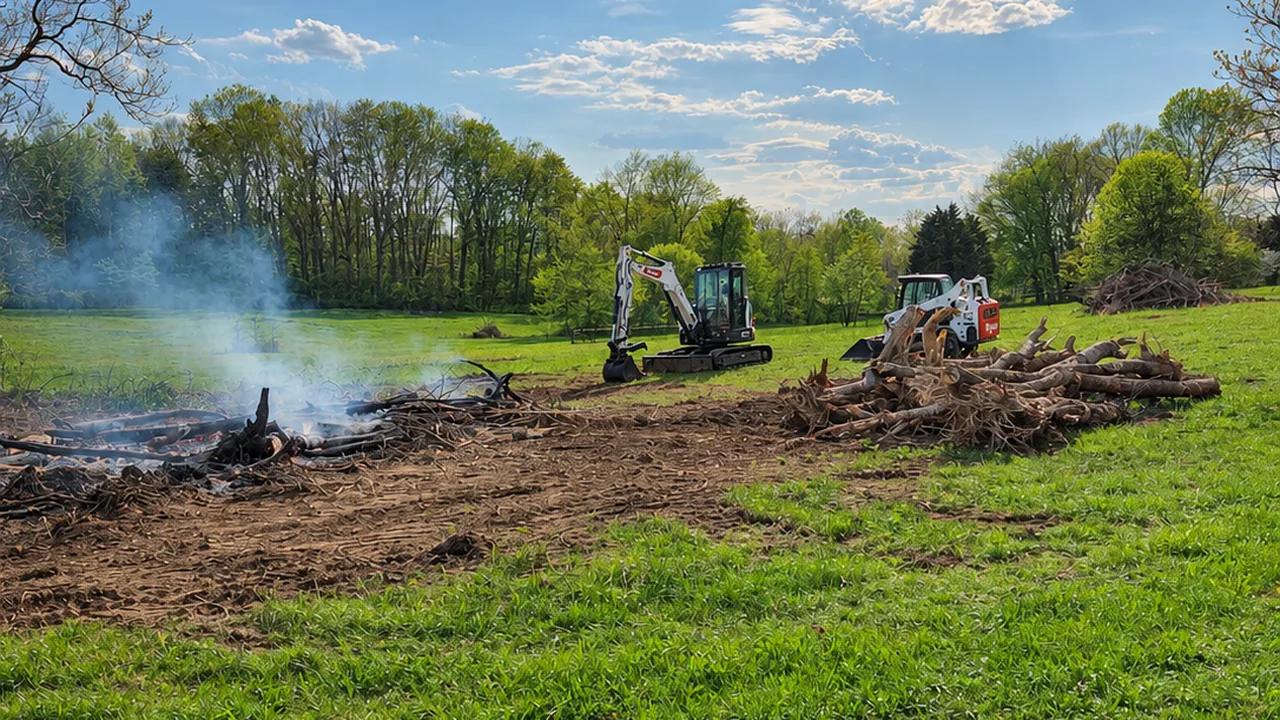
- Clearing and access. The extension guide says to clear brush, tree roots and topsoil off the dam site and the pond basin. That is land clearing work, and our post on what clearing land costs in Kentucky covers its price. Machines need a way in, and a farm lane or access road can be part of the plan.
- The dug dirt. Where the spoils go is agreed before work starts and written into the estimate. Cost guides list hauling dirt away as an added cost.
Will my ground hold pond water?
Whether a site will hold water depends on its soil. That is why a soil evaluation comes before any digging. Your county conservation district or the NRCS office can help. The state’s fish and wildlife agency says NRCS staff can assist with site selection and soil suitability.
The extension guide calls for test borings along the dam site and about four per acre in the basin. It names late summer and early fall as the best time to test. Spring tests can overstate how tight the soil is.
Karst, limestone ground that can hide sinkholes and cracks, is a known risk in parts of Central Kentucky. The guide lists Hardin, LaRue, Meade and Breckinridge among the state’s counties with karst. There, it warns, a pond that looks well placed and well built may still fail to hold water.
All ponds seep to some degree, the guide adds. We do not provide pond or dam engineering, and we do not promise that any pond will hold water. Before we recommend an approach, we look at the soil and the lay of the land.
Does cleaning out an old pond cost less than digging a new one?
Not per cubic yard. One national guide lists pond dredging at $20 to $60 per cubic yard of silt. Another lists $1.50 to $3.50 a yard for digging a larger new pond.
The dredging guide puts a medium residential or farm pond at $7,000 to $18,000. Bringing the machines in can add $1,000 to $3,000, and hauling silt away $500 to $5,000.
What happens to the silt is agreed before work starts, like any other spoils. The extension guide notes that built-up plant and organic matter often reduces seepage. Digging it out can change how a pond holds water. The guide also calls fixing a leaking pond the hardest pond management task.
When does a pond or dam need a permit in Kentucky?
Kentucky law calls a barrier a dam when it stands 25 feet or more high. One that can hold 50 acre-feet or more at its highest water level also counts. An acre-foot is one acre of water one foot deep. Building or changing a dam that size takes a Kentucky Division of Water permit.
The permit plans carry a professional engineer’s seal. Most farm ponds fall under both numbers, but that does not settle the question. The state’s dam rules also reach smaller structures whose failure could put people or property at risk. Other approvals can apply too:
- Fill or a dam in a stream’s floodplain can need a state floodplain permit.
- A dam across a stream, or fill in a wetland, may need U.S. Army Corps of Engineers approval. A state water quality certification can come with it.
- Pond work that disturbs an acre or more may need the state’s construction stormwater permit.
Kentucky law also requires notice to Kentucky 811 at least two full working days before digging starts. Who places that request is settled before the work begins.
This is general information. The Kentucky Division of Water and your county answer the permit question for your site, before any digging. In Southern Indiana, the Indiana Department of Natural Resources answers it. The property owner applies for any permit, and we explain what a pond job is likely to need.
How do you get a farm pond quote in Central Kentucky?
Mattingly Excavating digs new farm ponds and cleans out or reshapes old ones across Central Kentucky and Southern Indiana. We also clear brush and saplings from grown-up pasture and fence lines. Read about our pond digging and clean out work, then call or text (502) 671-3465 for a free estimate. The estimate lays out the proposed work and the price.