
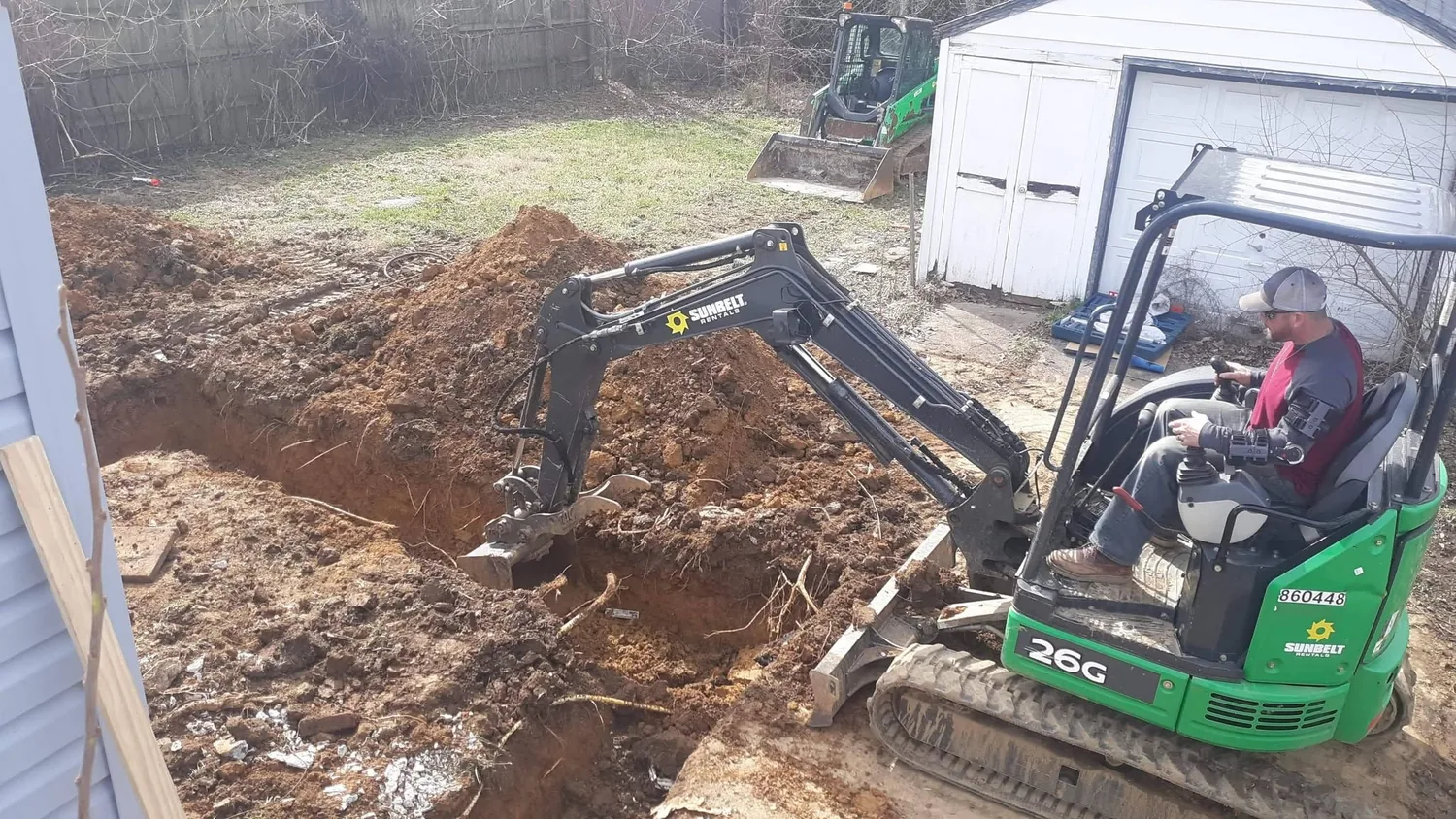
How Much Does Land Clearing Cost in Kentucky?
National cost guides put land clearing at about $500 to $8,000 an acre. Light brush and small trees sit near the bottom of that range. Dense woods with big trees and heavy roots sit near the top. One guide’s national average works out to about $3,050 an acre.
A quarter-acre town lot runs about $125 to $3,000 in those guides, and a half acre about $250 to $5,000. These are market numbers, not our price list. None of the three guides lists Kentucky on its own, so read them as a starting point. Where a job lands depends on the ground and on choices you make before land clearing starts.
What does land clearing cost per acre in Kentucky?
Three national cost guides, updated between January 2025 and September 2026, price clearing by how thick the growth is.
| What grows on the ground | Per acre in national cost guides |
|---|---|
| Light: brush and small trees | $500 to $2,500 |
| Moderate: thick brush and medium trees | $2,500 to $4,500 |
| Heavy: dense woods with large trees | $3,000 to $8,000 |
The tiers overlap because each guide sorts land a little differently.
Some jobs are priced by the hour. Two national guides put land clearing at $110 to $250 an hour.
The University of Kentucky’s extension service also lists custom rates for hired farm machinery. Its 2024 list puts a 2 to 6 ton track hoe at $112.50 an hour, a skid loader at $108.50. Each rests on one out-of-state survey, so the list advises caution.
What does it cost to clear a lot or a small tract?
One national guide breaks its ranges out by tract size.
| Tract size | Light growth | Dense woods |
|---|---|---|
| Half acre | $250 to $1,000 | $1,800 to $2,800 |
| 1 acre | $500 to $2,000 | $3,600 to $5,600 |
| 2 acres | $1,000 to $4,000 | $7,200 to $11,200 |
| 5 acres | $2,500 to $10,000 | $18,000 to $28,000 |
A barn site on an old hayfield and a homesite cut from the woods can land in different columns. Those ranges cover the clearing itself, and grading and hauling often cost extra.
What moves the price of clearing land?
- Acreage. Bigger tracts cost more in total, though one guide says per-acre prices dip a little as they grow.
- How thick the growth is. Brush and saplings clear quickly. Dense woods with thick underbrush take far more cutting and handling.
- Tree size. Big trees cost more to take down, and one guide puts single-tree removal at $400 to $1,200 a tree. With our tree removal work, the stump can come out in the same visit. When a tree near a house needs climbing or a bucket truck, we bring in a tree service we trust.
- Stumps and roots. Leaving stumps in costs less up front. A spot that will be built on or graded needs the stumps and roots out. Our stump removal digs each stump and root ball out whole. Backfilling the holes can be part of the job when it is in your estimate.
- Terrain. Steep slopes and wet creek bottoms slow machines down, and rock adds time too. When the ground is too wet, we say so and schedule the work for when it allows.
- Access. Ground right off the road costs less to clear than a back tract. A narrow gate or a soft lane can mean smaller machines or extra trips.
What happens to the debris. Hauling logs and brush off adds trailer time and disposal fees. Some owners keep firewood or leave brush piles out back instead.
Burning is limited by state and local rules. In Jefferson County, open burning is restricted all year. In Bullitt and Oldham counties, land clearing burns are barred from May through September.
Kentucky’s fire hazard seasons run February 15 to April 30 and October 1 to December 15. In those seasons, burning within 150 feet of woodland or brushland is allowed only overnight, between 6 in the evening and 6 in the morning.
The method. Cost guides list forestry mulching, a method other companies use, at about $400 to $1,500 an acre. It shreds the growth where it stands, and one guide says it does not suit building sites. We clear with our excavation equipment and chainsaws, and we dig stumps out whole.
When does clearing land need a permit in Kentucky?
It turns on how much ground is disturbed and where it sits.
- One acre or more. Construction that disturbs one acre or more needs coverage under Kentucky’s construction stormwater permit, KYR10. Smaller pieces of a larger plan that will reach an acre count too. The permit lists clearing and grubbing, the digging out of stumps and roots, among its examples. A Notice of Intent goes to the Kentucky Division of Water at least seven days before work starts.
- Farms. Crop cultivation is exempt from that permit, but building a barn or a holding pond counts as construction.
- Local erosion permits. In Jefferson County, Louisville MSD requires a Site Disturbance Permit for land disturbance over 2,000 square feet. Other counties and cities can have their own.
- Floodplain. Kentucky requires a state floodplain permit before construction starts in a floodplain. Its rules count fill and excavation there as development. Many communities issue their own floodplain permit too. FEMA flood maps show whether a parcel is in a mapped floodplain.
- Streams and wetlands. Putting fill or dredged soil in a stream or a wetland falls under the U.S. Army Corps of Engineers. That work also needs a water quality certification from the Kentucky Division of Water. The state lists clearing a wetland among the jobs that may need one.
Near some streams, the stormwater permit also calls for an undisturbed buffer of at least 25 or 50 feet. The property owner or the builder applies for these permits, and we explain what a job is likely to need.
What should you decide before the clearing starts?
- Which trees stay. Selective clearing keeps the trees you want, such as shade trees by a homesite or a windbreak by a barn. We mark what stays before we start. One guide notes selective clearing can cost more per acre but leaves less debris to handle.
- The debris plan. What happens to the logs, limbs, brush and stumps is settled before we start and written into the estimate.
- Which steps you need. A full clearing job has four steps: clear, dig stumps and roots, handle debris and rough grade. A job may need only some of them, and the estimate lists the ones you choose.
- The finish. A rough grade leaves the cleared ground usable. Finish grading for a house or a barn is a separate step, part of site preparation and grading. One guide puts grading a small, mostly level home site at $2,000 to $5,000.
- Utility lines. Lines have to be located before any digging, and digging out stumps is digging. Kentucky law requires notice to Kentucky 811 at least two full working days before digging starts. Who places that request is settled before the job begins.
How do you get a price for your own land?
The guides give you a range, and your land sets the number. Call or text (502) 671-3465, or send a description and photos of the property. We talk through the scope and look at the land when a visit is needed. Then we put a free estimate in writing, with the proposed work and the price.
We clear town lots and farm acreage across Central Kentucky and Southern Indiana. Read how our land clearing service works before you call.